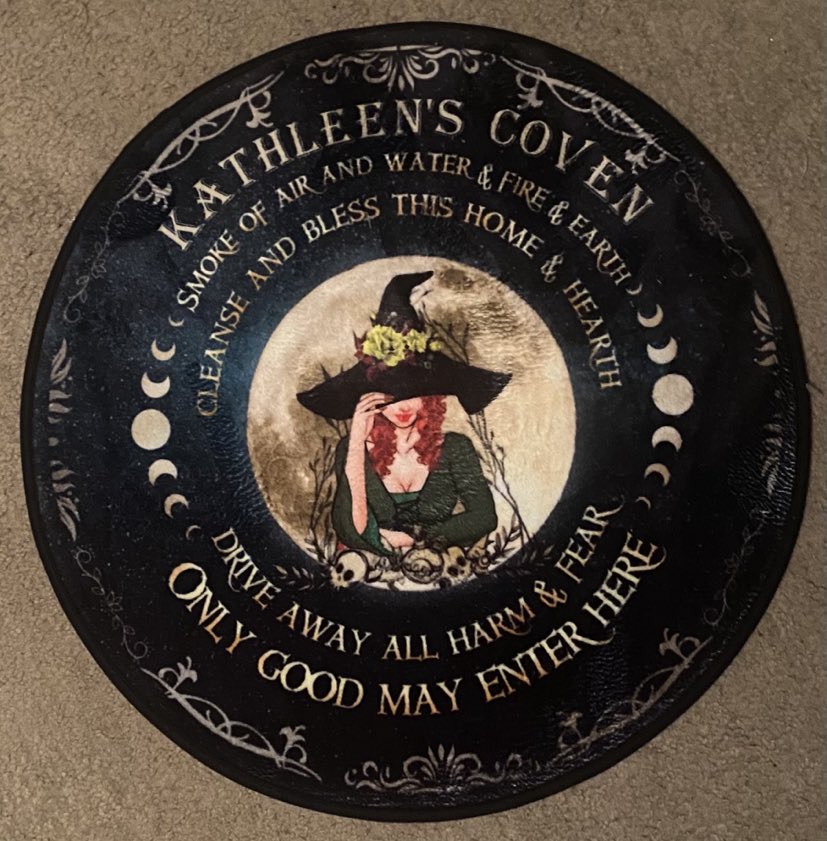


In the manuscript I’m currently pitching, my main character isn’t your typical sorcerer. He’s got this whole neurodiverse thing going on. And he ends up being the most powerful sorcerer ever born. I mean, come on, what‘s a fantasy novel without an extremely powerful sorcerer, right?
Now, why is he neurodiverse? Well, because I’m neurodiverse. And while I’m not out here casting spells left and right (if I could I’d already have an agent and a husband), I do have this knack for seeing magic in the everyday circumstances.
I’ve noticed something interesting among my crew of neurodiverse friends—a lot of us are into mysticism, spirituality, alternative belief systems. It’s like we’ve got this special connection to the magical side of life.
That got me wondering: Is there a correlation between neurodiversity and alternative spirituality?
I believe there is. But let’s be clear: when we talk about spirituality, we’re not just referring to conventional religion, but also to alternative belief systems and to personal paths people might follow.
If you’ve ever delved into traditional religion, you’ll know there is a vast difference between just going through the motions and truly living your beliefs. Now, I could easily name-drop specific individuals or churches, but I’ll behave (for once) and keep it general. Spirituality, at its core, is about forging a deep connection with the world and with others in ways that are profound and meaningful. It’s about walking the talk, so to speak, driven by a deep faith in something greater, whether you call it God, the Universe, the Divine, Life, whatever resonates with you.
That’s not to say neurotypical people can’t be spiritual. Of course they can. But there seems to be a trend among the neurodiverse community towards alternative forms of spirituality rather than traditional organized religion.
Why?
Spirituality isn’t about blindly following the rules set by some authority figure. It’s about approaching life with empathy and compassion, embracing everyone and everything around you exactly as they are from a place of deep understanding.
Spirituality, with its examination of larger purposes, provides meaning and structure to thoughts and experiences. For neurodiverse individuals, navigating a world which wasn’t built for them can be challenging, and spirituality’s insights can serve as a valuable coping mechanism.
Spirituality embraces the Golden Rule, which emphasizes treating others with respect and kindness—a concept echoed in various forms across different religions worldwide. It revolves around the idea that every individual has inherent worth and is exactly where they’re supposed to be in the grand scheme of things. This perspective teaches there are no mistakes in the universe, and that challenges present opportunities for growth and learning.
Moreover, spirituality reinforces the notion that each of us is perfect just as we are. This is incredibly empowering, especially for those who have felt marginalized or excluded. Many neurodiverse individuals have experienced a lack of belonging, with statistics showing they’re twice as likely to face bullying than their neurotypical counterparts.
Given these factors, it’s natural that alternative spirituality provides a sense of home and acceptance for many neurodiverse individuals, offering a space where they can connect with others who share similar experiences and beliefs.
It’s often said humans only tap into a fraction of their brain’s potential, with estimates suggesting it could be as low as 10%. But here’s the thing: to the best of my knowledge, nobody ever claimed we’re all using the same 10%. Those of us who think differently, who perceive the world through unique lenses, might be more inclined to perceive the universe in ways which organized religion doesn’t always address.
We live in a world rich with diversity because of our own neurodiversity, allowing us to connect with both our internal selves and the external world in beautifully unique ways. This diversity is celebrated by those who practice spirituality.
Ultimately, it boils down to this: every person deserves to be honored, loved, and respected. Finding a belief system which resonates with your experiences is essential to navigating life while preserving your sanity, and for neurodiverse individuals spirituality may just be the key to making that happen. To me, the one essential rule is to live by the fundamental principles shared across all faiths: do no harm and approach everything from a place of love.
Namaste.
I love this!!!
Thank you so much, Susan!
“Neurons Touch the Sky.” How could I resist such a compelling title? And you simply did not disappoint. Thank you for gifting me with such a fresh, new perspective, Kathleen!
More please!